
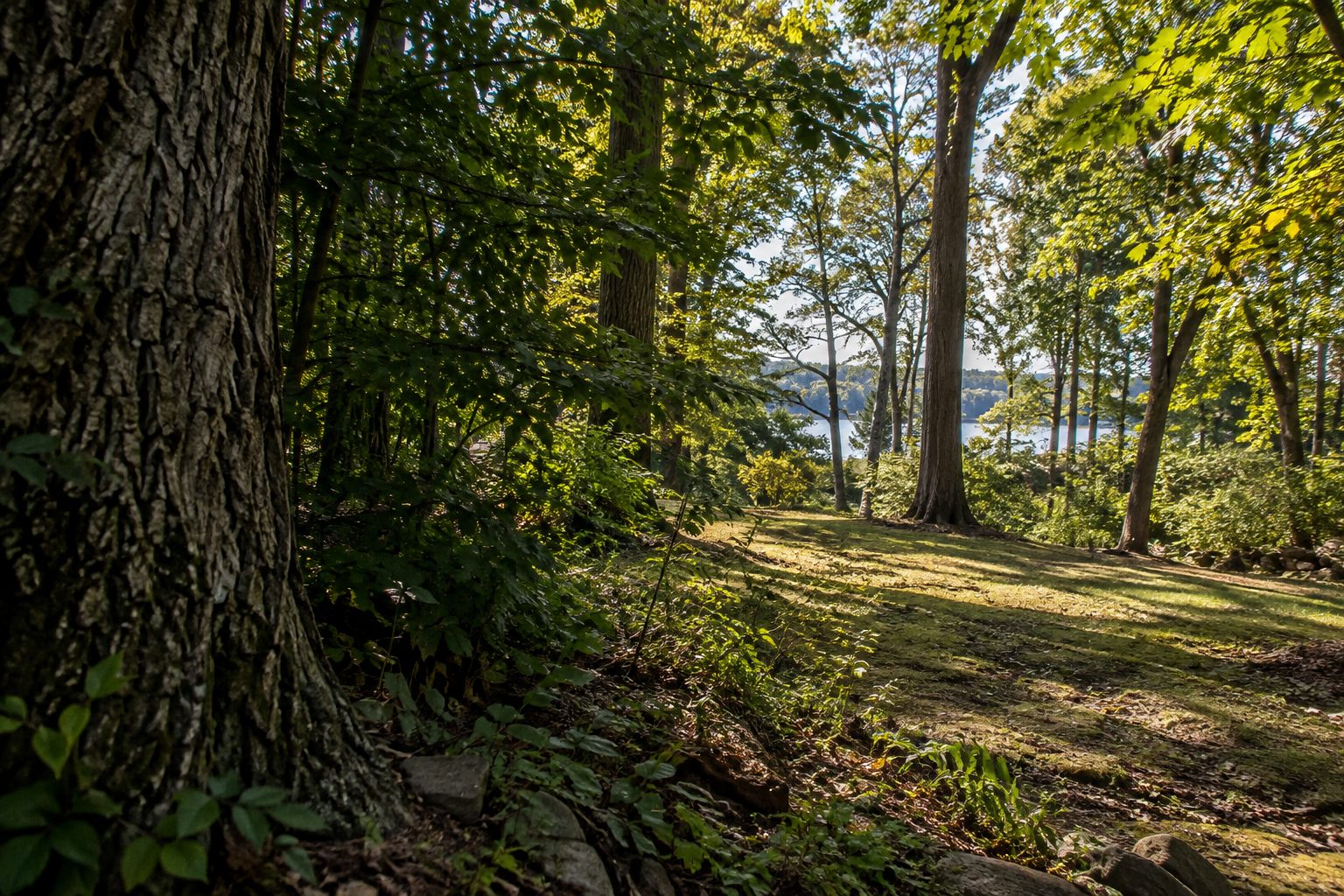
A wooded lot needs a selective plan
On a Stony Brook property with interlocking canopy, removing one tree can affect access through several others. The target trunk may stand beyond the easiest equipment route, and the understory may hide roots, changes in grade, or old landscape features. Walk the actual site rather than treating the wooded edge as unoccupied space.
Heavy Duty Tree Service serves Stony Brook from Port Jefferson Station. This page focuses on tree removal in Suffolk County, with attention to the surroundings that make a developed woodland property different from an open lot. No completed local job or particular institutional property is claimed here.
Identify what stays as clearly as what goes
A neighboring oak or maple may share the visual canopy without being part of the removal request. Mark the correct tree and explain which screening, shade, or understory plants matter. Equipment access and section handling should be discussed around those retained features. A broad view from the driveway can conceal the tightest working point behind the house.
Sometimes the actual concern is a roof-side branch or a damaged limb. Consider tree trimming in Suffolk County before deciding the entire tree must go. Where decline affects the whole structure, describe what has changed and ask about condition. There is no promise that a particular pruning cut can make an unstable tree safe.
Controlled handling near structures
Older landscaping, fences, patios, and additions can reduce the available landing space. The wood needs a route out that makes sense for its size and location. A crane may be evaluated for a constrained site; crane tree removal in Suffolk County explains why setup, reach, and support all matter. The size of the tree alone is not the deciding factor.
Point out overhead wires and known underground utilities. Include irrigation, drainage, or septic components that may not appear in ordinary surface photographs. Soft ground and slopes can change equipment choices. Any work involving lines needs utility coordination first, not a private guess that the line is inactive.
Plan the woodland floor afterward
Removal leaves a choice about the stump and woody material. Suffolk County stump grinding reduces an agreed area, while roots beyond it may remain. Explain whether the spot becomes lawn, a planted bed, or part of a construction plan. Each endpoint implies different preparation and should not be collapsed into a single vague cleanup instruction.
Logs retained for personal use need an agreed placement area and handling specification. Chips scattered into an existing planting area may not suit your landscape plan. Discuss hauling, piling, or spreading explicitly; splitting, stacking, topsoil, and reseeding are additional items unless included. A final walkthrough should compare the real finish with those choices.
A site visit before a calendar promise
Scheduling during published 9 AM–5 PM hours depends on scope, conditions, and equipment coordination. Wet ground may affect a route that was suitable on the estimate day. Share a following contractor’s schedule, but leave room to confirm the work sequence before closing access with new fencing or construction.
Stony Brook is in the Town of Brookhaven. Requirements vary by municipality; we’ll tell you what applies, and the parcel’s actual approvals need checking. Ask for current insurance documentation; the site’s verified statement remains pending. Keep children and pets away from operations, resolve boundary access beforehand, and expect the estimate to explain the method rather than simply attach a price to tree height.
Questions about Stony Brook
Can nearby trees stay untouched during removal?
Identify retained trees and ask how access and handling will be planned around them. The scope should name the target tree rather than leaving a wooded group open to interpretation.
Is a crane required for a tree behind the house?
Not automatically. The overall site, tree condition, receiving area, reach, and support determine whether lifting is a suitable option.
Should I remove understory plants before the visit?
Do not begin cutting to simplify an estimate. Show what is present and identify plants you want retained; the route and preparation can then be discussed together.