
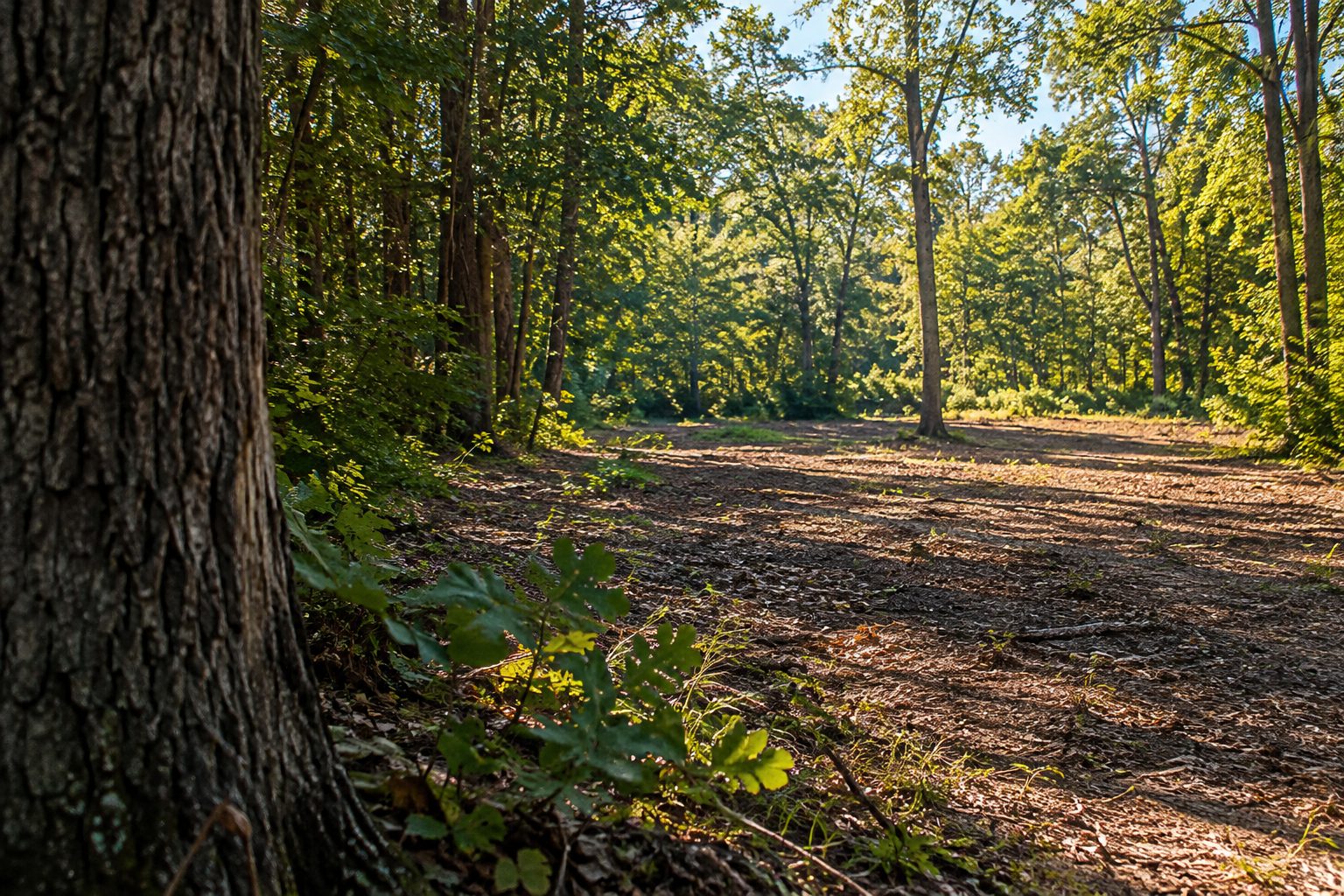
Put a boundary around the project
Medford properties can range from developed yards to deeper wooded sites. “Clear the back” can describe very different areas depending on who is standing at the gate. Begin with marked limits, a clear objective, and the vegetation that must remain. A tree screen at the rear or a useful shade oak should not disappear because the clearing instruction was too broad.
Heavy Duty Tree Service serves Medford from Port Jefferson Station. Lot clearing in Suffolk County is the primary angle here, with parcel-specific planning rather than an assumption that every wooded site should be opened. Clearing is one stage of a project, not a declaration that land is approved for construction.
Separate brush, trees, stumps, and soil work
A central Suffolk mix of oak, pitch pine, locust, vines, and planted growth can conceal sizable stems behind lighter brush. Identify what is present on the actual parcel. Tree removal in Suffolk County may be needed for individual trees near structures, even within a broader clearing boundary.
Stumps also need a specific endpoint. Suffolk County stump grinding is different from full excavation, and neither means the surface has been graded or compacted for a later installation. Ask the following contractor what condition is required, then bring that requirement to the scope discussion before pricing.
The route is part of the clearing area
Long access through a narrow side passage can change how material is handled. Equipment must reach the work, process vegetation, and move wood or chips to their agreed destination. Show soft ground, slopes, overhead lines, drainage, septic features, and any older debris that may be hidden below the growth.
Do not treat unknown dumping or buried construction material as ordinary tree debris. Identify known conditions and agree how discoveries will be assessed. A clearing quote should not quietly become waste excavation, engineering, or land-use advice. Ownership boundaries need an appropriate determination if their location is uncertain.
Preserve what serves the property
Retained trees may provide shade, screening, or a transition to neighboring lots. Mark them in a way that can be checked before work. If selected canopy clearance is needed around those trees, tree trimming in Suffolk County should have its own objective. Clearing underneath does not automatically justify pruning every retained branch.
Discuss equipment movement around retained features as well as cutting limits. A new fence, drainage installation, or pool project may affect the useful sequence. Completing the clearing before access narrows can be practical, but the plan should be coordinated with the actual next-stage contractor rather than a generic calendar assumption.
Define the handoff in plain terms
Will branches be chipped, logs hauled, or processed material retained? Where will any pile stand? Is spreading included? Those choices affect effort and the finished site. Topsoil, grading, seeding, erosion measures, and construction preparation are separate unless expressly listed. A visible opening is not necessarily a finished landscape.
Medford is in the Town of Brookhaven. Requirements vary by municipality; we’ll tell you what applies. Confirm the relevant approvals and ask for current insurance documents because verified public wording is pending. Hours are 9 AM–5 PM every day. Weather, support conditions, scope, and availability shape scheduling. At completion, compare the marked limits, retained vegetation, remaining stumps, and debris destination with the written plan before handing the area to another trade.
Questions about Medford
Does clearing include leveling the land?
Vegetation work and grading are different scopes. Ask what roots, contours, and depressions remain and what the next contractor requires.
Can a wooded buffer stay behind the cleared area?
Yes, identify its limits before pricing and before machinery begins. Retained vegetation should be as explicit as the material to be removed.
What happens with hidden construction waste?
It needs separate assessment and potentially different handling. Agree on the response to unexpected material rather than treating everything under brush as tree debris.