
Open the right space, not every space
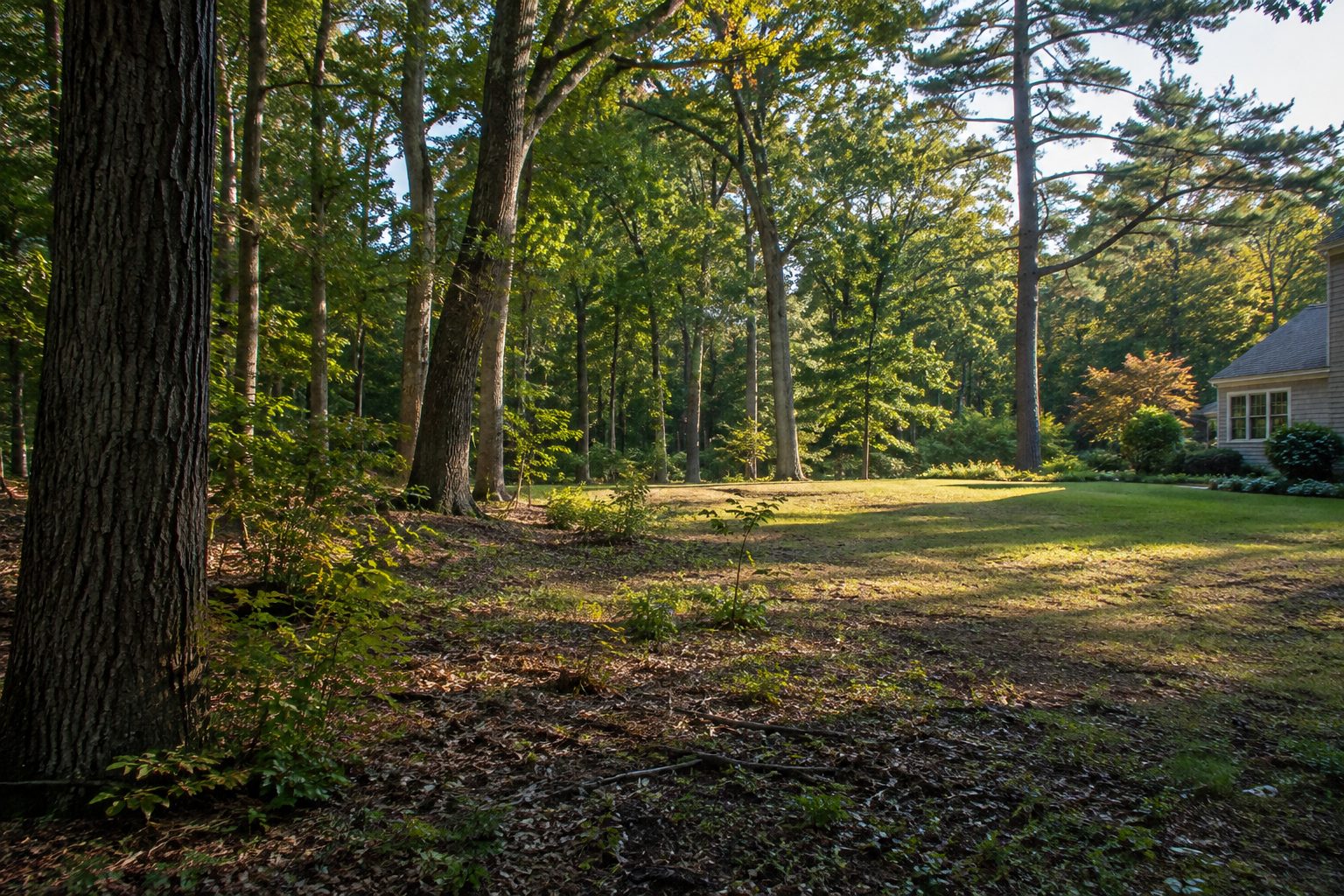
A Ridge parcel can contain oak-and-pine woodland, understory growth, and already developed areas within the same boundary. The clearing objective may be a small usable opening rather than an entirely bare lot. Mark where work starts and ends, which trees remain, and why the space is being changed before choosing equipment.
Heavy Duty Tree Service serves Ridge from Port Jefferson Station. Lot clearing in Suffolk County begins with a site-specific scope. A regional woodland description is not a statement that any particular parcel may be cleared or developed. Land-use and environmental questions need the relevant checks before authorization.
Dense growth can conceal a different job
What looks like brush from the street may include larger pine, oak, locust, old stumps, and hidden dumped material. Walk the limits and identify known conditions. Individual trees near buildings may require controlled tree removal in Suffolk County rather than the same handling used for lighter vegetation.
Old wood and roots also need definition. Suffolk County stump grinding is not complete root excavation or a promise of a construction-ready surface. If a foundation, driveway, or drainage project follows, obtain the next professional’s requirements and specify the handoff accordingly.
Retention should be visible before the work
Mark screens, shade trees, and edge vegetation that should stay. A retained tree may need a separate tree trimming in Suffolk County objective if branches interfere with access, but clearing below it does not automatically mean altering its canopy. Precision avoids an irreversible misunderstanding about which growth belongs in the finished landscape.
Property lines matter just as much. A visible path or old fence may not establish ownership. Resolve uncertainty through an appropriate process before machinery crosses the area. Permission to enter a neighboring route should be clear, rather than inferred because an opening happens to be convenient.
Work out where the material goes
A longer route from clearing area to loading position can affect the handling effort. Show narrow turns, overhead wires, wet ground, septic features, and buried drainage. The processing and receiving area needs enough room without compromising retained vegetation or blocking another contractor’s access.
Discuss chipping, hauling, piling, or spreading in explicit terms. A mound left near the boundary may not suit the next project. Imported fill, grading, compaction, seeding, and erosion measures are separate unless specified. Unknown construction waste or buried material should prompt a fresh assessment, not be silently included as ordinary tree debris.
Confirm the prerequisites before a work date
Ridge is in the Town of Brookhaven. Requirements vary by municipality; we’ll tell you what applies. Parcel-specific permissions must be checked, with responsibility for applications settled. Ask for current insurance documentation because a verified public statement has not yet been supplied.
Hours are 9 AM–5 PM, seven days a week. Scheduling depends on the proposed work, suitable ground conditions, and availability. Rain or wind can change the approach. Keep people and pets outside the operation area and review the marked limits before work begins. At completion, compare retained growth, removed vegetation, remaining roots, and material placement with the written plan. That review makes the handoff to landscaping or construction a defined next stage rather than an assumption that clearing finished everything.
Questions about Ridge
Does a wooded Ridge parcel automatically allow clearing?
No. The actual parcel and proposed work need the relevant requirements checked. This page makes no development approval or environmental exemption claim.
Can chips stay as part of the clearing plan?
They can be discussed, including where and how they are placed. Retaining processed material is different from hauling and from preparing a finished lawn.
What if a new project needs roots excavated?
Bring that requirement from the next contractor. Grinding, vegetation removal, and root excavation are separate scopes with different handoff conditions.