
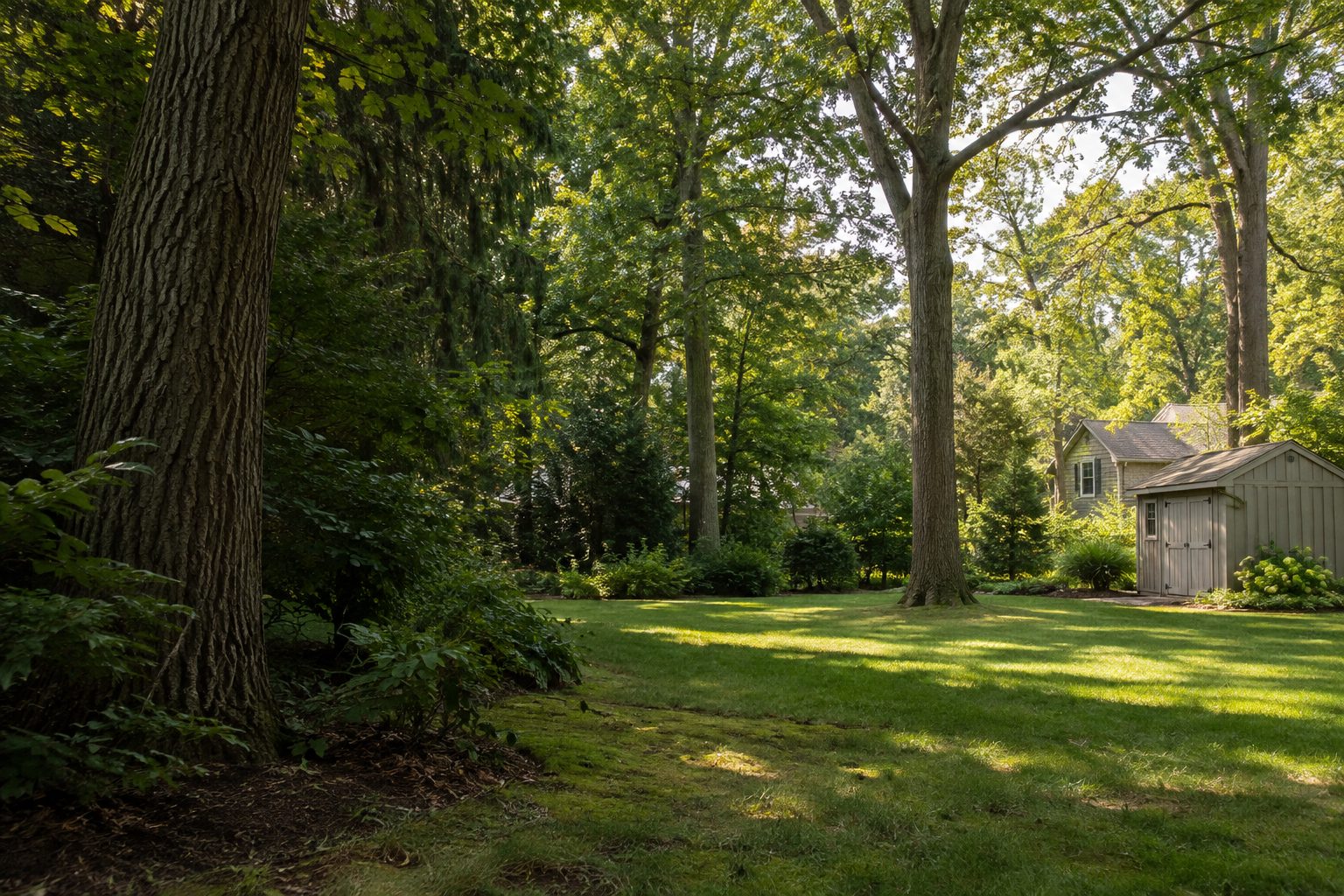
A cutting request needs a defined endpoint
Mastic properties can mix established homes, open yard, and patches of older growth. A tree may interfere with a shed, an access route, or a future garden without being equally difficult from every side. Identify the exact concern and the part of the property that should be usable afterward. That helps turn “cut it down” into an understandable scope.
Heavy Duty Tree Service serves Mastic from Port Jefferson Station. The local tree-cutting angle connects to tree removal in Suffolk County, including how branches and trunk sections are handled. No service-area page stands for a separate office or claims an invented local project.
Look at condition and surroundings together
Oak, pine, locust, and planted trees may present different forms and growth histories. The actual species and condition need consideration on the property. Describe recent changes, fallen branches, or interference with structures without approaching unstable material. A neighborhood’s general landscape does not establish whether an individual tree should be removed.
If only a selected branch conflicts with a route or roof, discuss Suffolk County tree trimming. Preserve the distinction between clearance and whole-tree removal. Useful shade or privacy may be worth retaining, and the estimate should identify what stays as well as what is addressed.
Getting the wood out is part of the job
A tree behind a house may require a route around fences, tanks, decks, or garden beds. Show the narrowest turns and any soft ground. Mention buried septic features, drainage, irrigation, and overhead wires before equipment positions are discussed. The work needs room for handling and loading, not just space at the trunk.
For a broader neglected patch, lot clearing in Suffolk County needs marked limits and an explicit retained edge. Hidden dumping, old concrete, and unrelated debris should be identified rather than assumed to be ordinary tree material. Boundary uncertainty requires resolution before cutting or crossing adjacent land.
Plan below the visible cut
Removal can leave the trunk cut near grade, with the stump still present. Stump grinding in Suffolk County is separately specified, including footprint and grindings handling. It is not a promise to remove every root or prepare the ground for any future building project.
Decide whether logs and chips are hauled, placed, or retained for use. Splitting, stacking, new soil, grading, and reseeding are additional outcomes unless written into the scope. The intended finish should fit the next project rather than make a new fence or planting installation work around a pile nobody discussed.
Keep timing and paperwork practical
Mastic is in the Town of Brookhaven. Requirements vary by municipality; we’ll tell you what applies. Confirm the actual tree ownership, relevant approvals, and access permission. Ask for current insurance documents while verified publishable wording is still pending.
The published hours are 9 AM–5 PM daily. Dates depend on scope, workload, weather, and suitable ground conditions. Sudden failures need distance; immediate threats and utility involvement go first to emergency services or the utility. Keep children and pets away during planned work, then review the identified tree, disposal choices, stump condition, and any remaining restoration at completion. A clear finish is part of the removal decision, not an optional detail after the cutting ends.
Questions about Mastic
Does keeping logs make the job a cut-only scope?
Not necessarily. Logs still need controlled handling and placement. Specify lengths, location, and any further processing before the estimate is finalized.
Can one branch be handled instead of the tree?
Explain the concern and ask whether a pruning objective fits the condition and natural form. Whole-tree removal is a separate decision.
What if a clearing area crosses a boundary?
Resolve ownership and access first. A visible opening or old fence is not sufficient authority to cut on another property.