
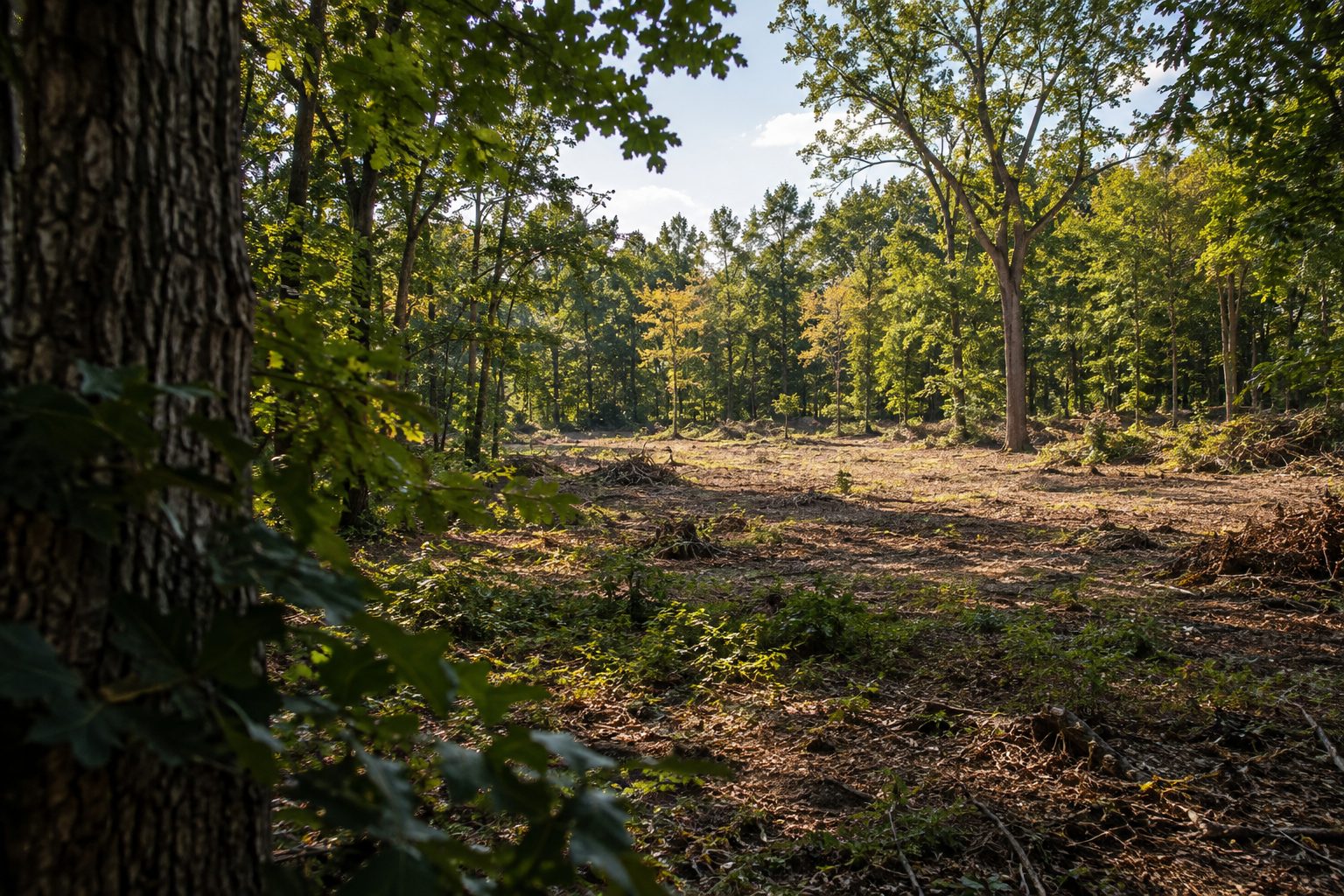
A larger parcel still needs precise limits
Riverhead sites can range from developed neighborhoods to more open parcels with wooded margins. A broad view across the land does not answer which vegetation should stay or what the next project requires. Begin with the intended area and a clear reason for the work. A marked opening is a more useful instruction than “clear the lot.”
Heavy Duty Tree Service serves Riverhead from Port Jefferson Station. Lot clearing in Suffolk County is the primary angle here. The service does not establish land-use approval, construction readiness, or a right to disturb every part of a parcel. Those questions need the actual property and proposed use checked.
Inventory the material before choosing the method
A wooded edge may contain oak, pine, locust, vines, smaller stems, and older stumps. Identify what is actually there and what belongs in the scope. A larger tree near a building may need controlled tree removal in Suffolk County even when lighter brush is handled elsewhere in the same project.
Stumps and roots are separate from above-ground vegetation. Suffolk County stump grinding reduces an agreed area rather than excavating an entire root network. Grading, drainage, compaction, and construction support need separate requirements. Bring the next professional’s specification into the conversation instead of asking tree clearing to imply it.
Keep a retained edge deliberate
Shade trees and screens should be marked as clearly as removed material. If a retained tree needs clearance, tree trimming in Suffolk County should identify its own objective. Opening the ground beneath a canopy is not automatic permission to alter every branch above it.
Ownership lines, access rights, and any protected or sensitive areas need confirmation before equipment enters. An old path or fence may not settle a boundary. Known buried structures, previous dumping, or construction debris should be identified; unexpected material may require a changed scope or different handling rather than being treated as ordinary wood.
Access and disposal can dominate the effort
A long internal route changes how often material is moved. Show ground conditions, narrow turns, overhead utilities, drainage, septic features, and the receiving or loading area. Open ground is not always suitable support. A wet route can limit equipment even when the vegetation itself is easy to reach on foot.
Agree on hauling, chipping, retained logs, piling, or spreading. Material left on site should have an agreed place and purpose. Splitting, stacking, fill, topsoil, seeding, erosion measures, and landscape establishment are separate unless included. A cleared surface and a finished building or garden site are different handoffs.
Check the parcel before setting the calendar
Riverhead is both a town and a community name. Verify the actual parcel and proposed work for requirements. Requirements vary by municipality; we’ll tell you what applies. Clarify approval responsibility and ask for current insurance documents while verified public wording is pending.
Published hours are 9 AM–5 PM every day. Dates depend on scope, workload, equipment, and suitable conditions, with weather able to change a plan. Keep people and pets outside operations and review the marked limits before work begins. At completion, compare retained vegetation, removed material, remaining roots, and debris placement with the written scope. The next trade should receive a known condition, not a generic promise that clearing has completed every preparation stage.
Questions about Riverhead
Can clearing be limited to a corridor?
Yes, mark the exact route and retained edges. A corridor, selected opening, and full-area clearing are different scopes and should not share vague boundaries.
Does clearing approve a future building use?
No. Land use, construction requirements, engineering, and relevant approvals remain separate. The tree scope should describe the specific vegetation work and handoff.
How should retained chips be described?
Agree on the destination, amount of handling, and whether spreading is included. Leaving processed material is not equivalent to preparing soil for every future use.