
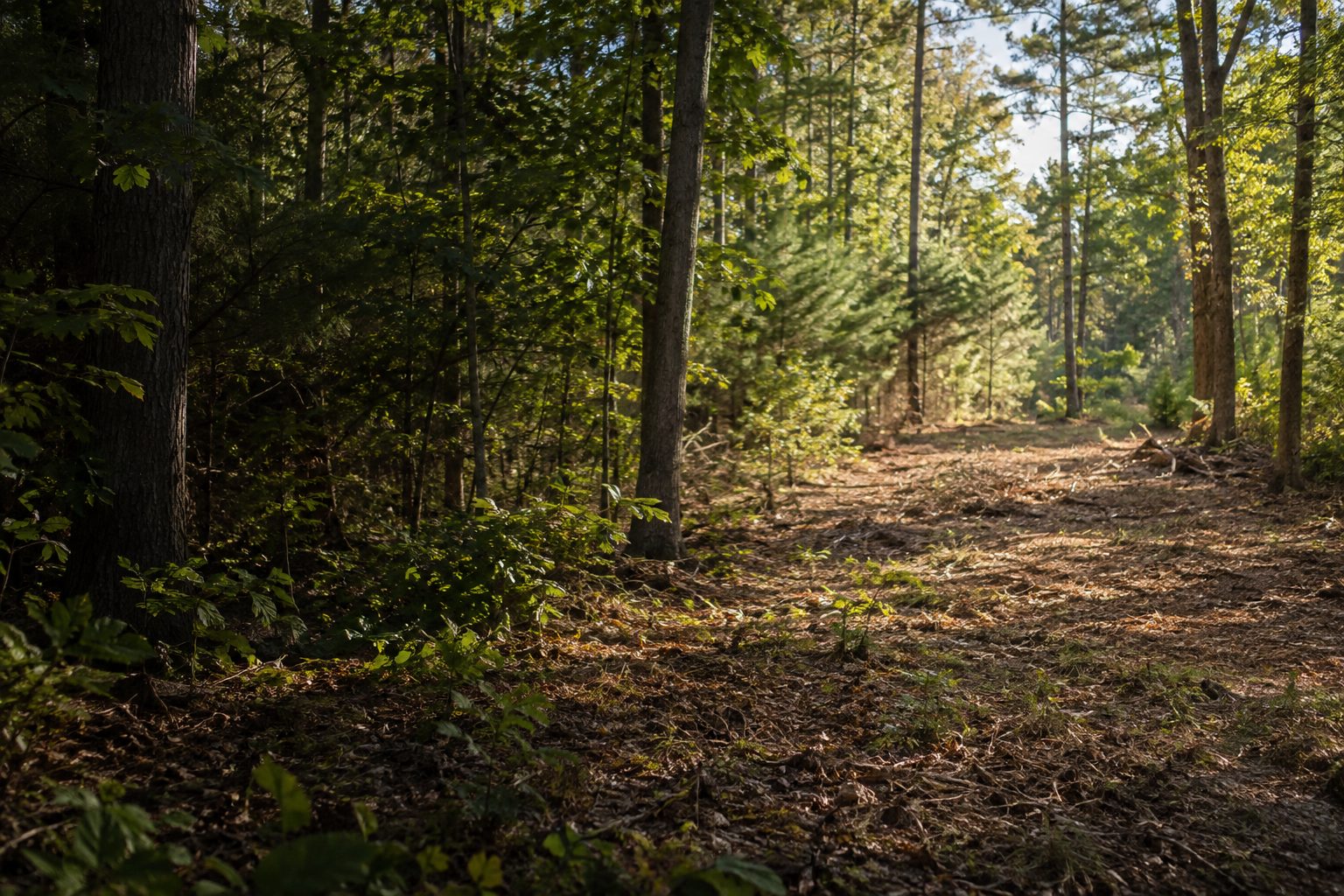
Clear a defined area, not an idea on a map
Lot clearing can mean opening a small overgrown corner, preparing a fence corridor, or removing selected woody growth from a larger parcel. Those are different jobs. Start with the boundaries, the vegetation to retain, and the reason for the work. Heavy Duty Tree Service is based in Port Jefferson Station and serves Suffolk County; the scope must be tied to the actual parcel rather than a generic “clear everything” instruction.
A useful plan distinguishes trees, brush, stumps, existing debris, and the soil work needed afterward. It also identifies protected or retained vegetation, drainage features, utilities, and neighboring property. If the next step is a building, driveway, pool, or landscape installation, bring that contractor’s requirements into the discussion early. Clearing should not be mistaken for engineering approval or permission to change the use of land.
Selection comes before machinery
Mark what stays as carefully as what goes. A useful shade tree, a privacy screen, and an established boundary planting can be difficult to replace once accidentally removed. Do not rely on an approximate gesture toward the back of a wooded lot. Where ownership lines are uncertain, resolve them through an appropriate process before equipment enters the area.
Central Suffolk parcels may combine pitch pine, oak, locust, vines, and planted vegetation, while other properties have a different mix. The observed species, density, tree condition, and undergrowth affect handling. A patch that looks like brush from the driveway can contain sizable trunks or hidden dumping. Site inspection should identify those distinctions rather than pricing only by the apparent square footage.
Clearing is not automatically grading
Cutting and processing vegetation does not mean every stump and root has been excavated. Stump grinding in Suffolk County, root removal, fill, compaction, grading, drainage, and final landscaping each need an explicit scope. A clean-looking surface may still be unsuitable for a planned foundation, paving, or planting project.
Existing concrete, construction debris, buried tanks, contaminated material, or unknown waste should not be casually treated as tree debris. Point out anything known and agree on how unexpected material affects the work. Excavation, regulated waste handling, surveying, and civil design may require separate professionals. This page does not promise a buildable or permit-ready parcel at the end of ordinary clearing.
The factors behind the estimate
Area is only a starting point. Stem density, trunk dimensions, species, slope, access, disposal volume, and the amount of material retained all affect the work. A narrow corridor with individual trees may take a different approach from an open rectangle of light brush. Overhead utilities and nearby structures can turn part of a clearing into controlled tree removal in Suffolk County rather than broad processing.
The receiving area for wood and chips also matters. Can trucks approach the work, or must material move along a long internal route? Is there enough turning room without crossing features that need protection? Saturated soil, steep grades, and restricted street access can influence equipment and timing. Clarify whether haul-away is included and whether retained material is left in piles, processed further, or spread in a defined area.
A staged job is often a clearer job
First, establish the parcel boundaries and the project objective. Next, mark retained trees and outline the vegetation and debris included. Walk access and identify utilities, drainage, septic components, and any areas equipment must avoid. Review municipal requirements and assign responsibility for approvals before agreeing on a work date.
The work can then proceed by the defined areas rather than an undefined sweep across the parcel. Where another contractor follows, agree on the expected handoff condition. At the final review, compare the cleared limits and material handling with the written scope. Note remaining stumps, retained root systems, separate grading needs, or areas left untouched by agreement. Photos and a marked plan can make that discussion easier without replacing an actual survey.
Schedule around the ground, not just the calendar
Business hours are 9 AM–5 PM, Monday–Sunday. Clearing appointments depend on scope, equipment, current workload, and suitable conditions. Wet ground may change access or require postponement. Wind and storms may also affect tree handling. Tell us about downstream work, but avoid booking another trade on an assumed completion date before the clearing scope is established.
Sudden storm failures are a different priority from planned clearing. Emergency tree service in Suffolk County describes urgent conditions and published availability; it does not promise overnight response. Immediate danger and power-line involvement require emergency services or utility coordination. A damaged tree inside a clearing boundary still needs an appropriate individual handling plan.
Finish with a usable handoff
Cleanup can mean removing selected vegetation and hauling the resulting wood, or it can mean retaining processed material on site. Write down which result you want. Do not assume that chips spread over rough ground equal a finished lawn, or that a stump cut low equals an excavated root zone. Landscaping, erosion measures, and construction preparation require their own specifications.
Requirements vary by municipality; we’ll tell you what applies. Parcel-specific environmental and land-use questions need verification before authorization, and no exemption is asserted here. Ask for current insurance documentation because verified publishable wording is still pending. Explore lot clearing in Medford, lot clearing in Ridge, and lot clearing in Riverhead for different planning contexts, then define the work for your own property.
Questions about Lot clearing
Does lot clearing mean every tree is removed?
Only if that is the agreed, authorized scope. Many projects retain selected trees, screens, or perimeter vegetation. Mark the retained areas before machinery begins.
Can clearing prepare land for construction?
It can be one stage, but construction may require surveying, excavation, engineering, permits, grading, and other work. Ask the next contractor what handoff condition is needed.
Is material always hauled away?
No universal disposal policy is promised. Specify hauling, piling, chipping, spreading, and any retained logs in the estimate so the result fits the parcel’s next use.
What happens if hidden debris is uncovered?
Unexpected debris can change scope, method, and disposal requirements. Agree on how work pauses and how the additional condition will be assessed before proceeding.
Can a boundary hedge stay while the interior is cleared?
Possibly, subject to the actual layout and access. Mark it explicitly as retained and discuss root-zone and equipment-route considerations with the rest of the plan.
Will the ground be level afterward?
Vegetation clearing is different from grading. Roots, depressions, and old site contours can remain unless a separate soil-work scope addresses them.