
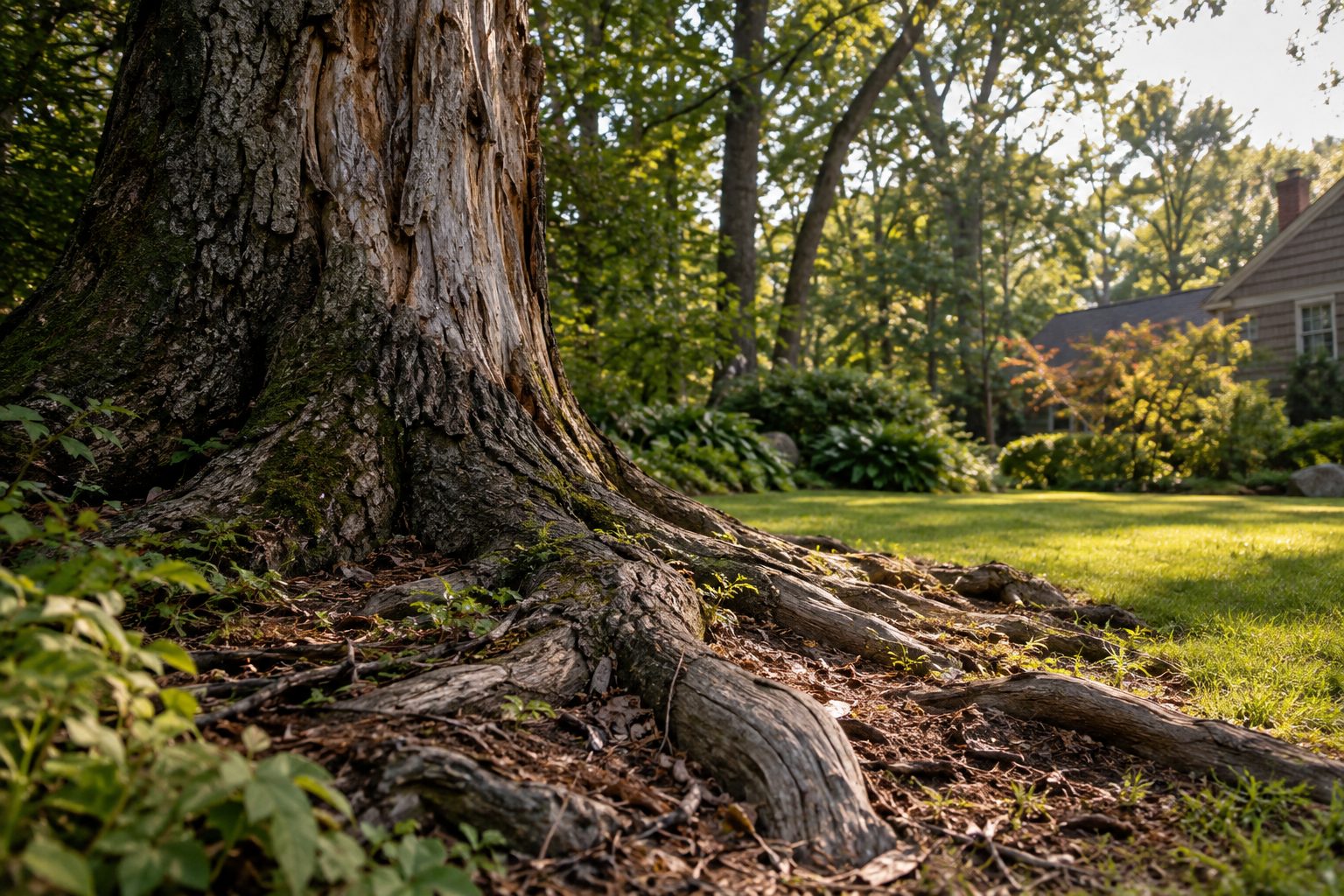
A dead tree changes the planning conversation
A tree with little or no living canopy is not simply a green tree without leaves. As wood deteriorates, the way it can be climbed, attached, sectioned, or handled may change. The ground below it and the structures around it still matter. Dead tree removal should account for condition as well as dimensions, especially where limbs reach over a building or a commonly used part of the yard.
Heavy Duty Tree Service serves Suffolk County from its Port Jefferson Station base. If you are unsure whether a tree is dead, explain the signs rather than deciding from one symptom. Seasonal leaf loss, branch dieback, damaged bark, and a fully dead crown are different observations. This page cannot diagnose the cause or certify a tree’s stability; an on-site review is needed to understand the proposed work.
Notice changes without approaching the hazard
Describe what you can observe from a safe position. Has the canopy changed over more than one season? Are larger branches shedding bark or falling? Has the trunk split, or has the soil around the base moved? Photographs can help communicate the concern when they can be taken without standing beneath the tree. Do not strike the trunk, climb it, or pull a branch to test how sound it feels.
A tree that has recently moved or is resting against another object needs particular caution. Keep people away and consider the emergency tree service in Suffolk County guidance. Immediate danger to people goes first to emergency services. Wires or utility equipment require utility coordination before tree work, whether the tree appears completely dead or only partly affected.
Condition can narrow the handling options
Species, trunk dimensions, branch spread, decay, lean, and access all affect the method. The availability of sound attachment points cannot be assumed. Nearby houses, sheds, play equipment, pools, and fences define where sections cannot go. A machine route that would work in dry conditions may be unsuitable after prolonged rain.
Where access is difficult, an appropriate lifting approach may be considered. Crane tree removal in Suffolk County explains setup, reach, support, and landing-space questions. No equipment choice makes every decayed tree straightforward. Discussing a known decline before the tree loses more material can make scheduling and access decisions less reactive, without implying that a particular tree has a predictable deadline.
Define exactly which material is being removed
An estimate should name the tree and distinguish full removal from selected deadwood pruning. A living tree with some dead branches may lead to a discussion of tree trimming in Suffolk County rather than removing everything. The written scope should match that decision so the property owner and crew are looking at the same result.
For full removal, clarify trunk cut height, branch processing, log handling, and debris collection. Old deadwood lying elsewhere in the yard is a separate item unless listed. Root excavation, new soil, fence repairs, and replacement planting do not automatically follow a removal. Ask whether stump grinding in Suffolk County is included, separately priced, or planned for a return visit.
How the work moves from concern to scope
Start with a site review of the tree’s observed condition and surroundings. Walk the access route and identify concealed features, neighboring property, and the area used by the household. The proposed method and estimate should explain how those limits affect handling and cleanup. Establish any necessary permissions before selecting a work date.
On the day, the working area and current conditions need another look. Keep vehicles, children, pets, and bystanders outside the discussed zone. The work follows the handling plan, with room to respond to conditions that become visible as the tree is addressed. The final review identifies what has been removed, how debris was handled, and what remains below grade or outside the stated scope.
Scheduling before the next project
If a fence, driveway, or construction job is planned, discuss the dead tree first so another contractor does not close the useful access route. A new gate or a fresh patio can change equipment movement. Early coordination may avoid handling the same material twice or taking a less practical route simply because the schedule was assembled in the wrong order.
Business hours are 9 AM–5 PM every day. Availability is subject to workload, weather, and the required method; there is no overnight dispatch commitment. Ground conditions, wind, and utility involvement can affect a planned date. Do not interpret a future appointment as a statement that a tree is safe to stand beneath until then. Maintain the appropriate distance and address immediate danger through the relevant services.
Cleanup should match how you want to use the space
Some owners want every manageable piece hauled. Others want specific log sections retained in a suitable place. Agree on that outcome before the job, including whether chipping, stacking, splitting, grindings, or fill are part of the scope. Rotten or awkward wood may not suit the intended reuse, so discuss condition rather than assuming every trunk becomes usable firewood.
Requirements vary by municipality; we’ll tell you what applies. Tree ownership and application responsibility need clarity, particularly near boundaries. A verified insurance statement is not yet published; ask for current documentation. Our Suffolk County service-area guide includes wooded and suburban settings, but the removal plan must be based on the actual tree, its condition, and the way people use the surrounding property.
Questions about Dead tree removal
Is a leafless tree necessarily dead?
No. Season, species, and the pattern of change matter. Describe the observations and arrange an assessment rather than relying on leaf absence alone.
Does a dead tree weigh less, so removal costs less?
Weight alone does not determine handling. Decay can limit attachment options, and brittle branches can complicate the work. Access and surrounding structures remain important cost factors.
Can the tree just be pushed over?
Do not assume an open-looking yard permits a whole-tree fall. Condition, nearby objects, direction, and available working room need evaluation before choosing a method.
Should I pull loose branches down first?
No. A branch can be attached or loaded in ways that are hard to see, and pulling it may release other material. Keep clear and describe what you have observed.
Will removal prevent every future issue in the yard?
Removing one tree does not assess neighboring trees, hidden roots, or unrelated site problems. List other concerns during the estimate so they can be discussed as separate decisions.
Can a dead tree remain for wildlife?
That is a property-specific decision involving location, condition, and how the surrounding area is used. This page cannot certify a standing dead tree as safe to retain.